
Why Does Bubble Wrap Look Thicker at the Beginning of the Roll and Thinner Near the Core?
When you open a new roll of bubble wrap, you may notice something interesting.
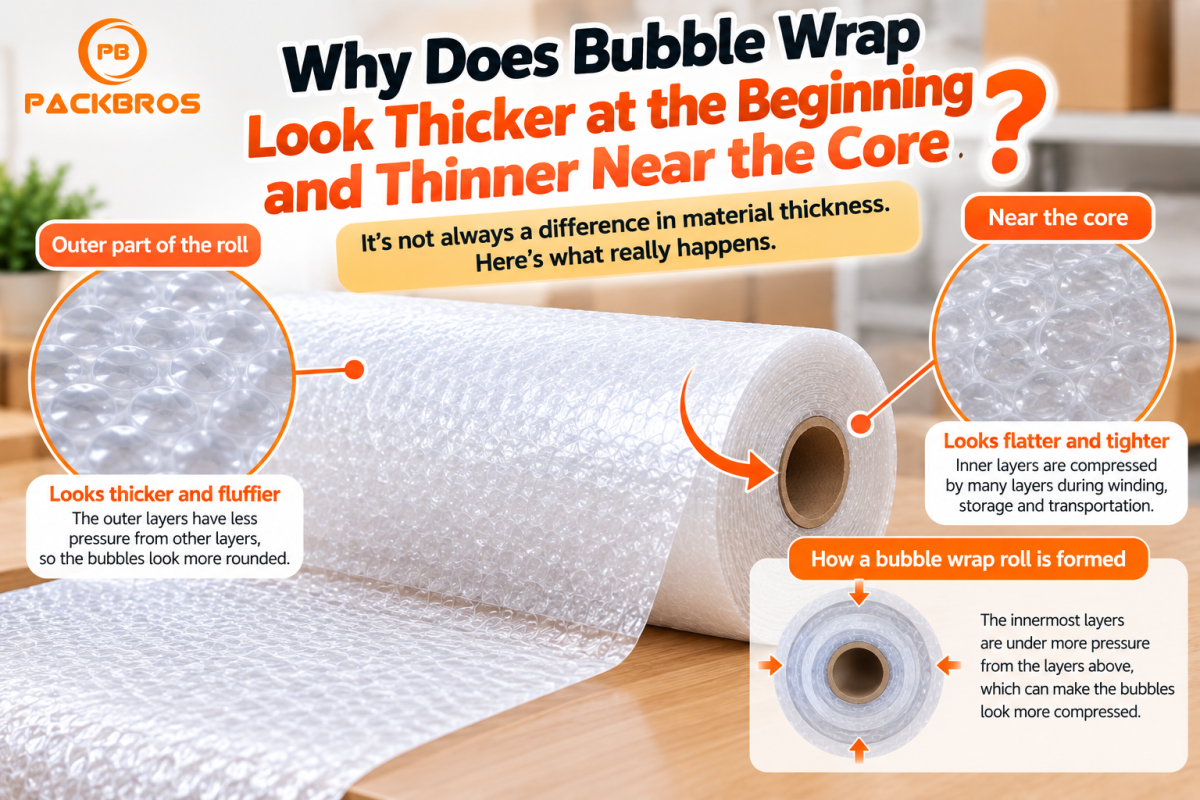
The bubble wrap on the outer part of the roll looks fluffy and thick, while the material closer to the core may appear flatter, tighter, or thinner.
This can make buyers wonder:
“Is the bubble wrap near the core actually thinner?”
Not necessarily.
The appearance of bubble wrap can change depending on winding pressure, roll diameter, compression between layers, and winding tension.
Understanding how a bubble wrap roll is formed can help businesses avoid judging material specifications based only on how thick or fluffy one section appears.
1. The Outer Layers Have Less Pressure on Them
A bubble wrap roll contains many layers of material wound around a central core.
The outermost layers are exposed to relatively little pressure from additional material above them.
As a result, the bubbles can appear more rounded and fluffy.
The situation is different deeper inside the roll.
Layers closer to the core have been underneath many additional layers of bubble wrap while the roll was wound, stored, stacked, and transported.
This can make the inner section appear more compressed than the outer section.
That visual difference does not automatically mean the plastic film itself has changed specification.
2. Bubble Wrap Near the Core Has Been Compressed for Longer
The first material wound around the core remains inside the roll until almost the entire roll has been used.
During that time, it can experience pressure from the layers wound above it.
This is one reason bubble wrap near the core may initially appear flatter when it is unrolled.
However, there is an important distinction between:
Compressed bubbles
and
Bubbles that have actually lost air.
A bubble that looks slightly compressed may still contain air and provide cushioning.
If you want to understand this difference in more detail, read:
Why Does Bubble Wrap Look Flat After Unrolling? Is It Still Safe to Use?
3. Roll Diameter Can Create a Visual Illusion
A full bubble wrap roll naturally has a much larger diameter than a nearly finished roll.
Because the outside circumference is larger, the outer layers can appear more open and bulky.
As you move toward the core, the roll becomes smaller and more compact.
This creates an important purchasing lesson:
A bigger-looking bubble wrap roll does not automatically mean it contains more bubble wrap.
Two rolls can look different in outside diameter even when their stated specifications are similar.
Roll appearance may be influenced by:
- Winding tension
- Bubble structure
- Amount of air inside the bubbles
- Film construction
- Roll length
- Material specification
For this reason, businesses should not compare bubble wrap based only on how large or fluffy the roll appears.
4. Overall Roll Thickness Is Not the Same as Film Specification
This distinction is particularly important when comparing bubble wrap suppliers.
A roll that looks thick and fluffy does not necessarily contain more plastic.
Likewise, a section of bubble wrap that looks slightly flatter does not automatically mean less material was used.
Instead of judging quality only by appearance, check measurable specifications such as:
Width × Length × GSM × Roll Weight
GSM stands for grams per square meter and provides a measurable reference for the amount of material used per unit area.
PackBros bubble wrap, for example, is specified at 40 GSM ±5%.
For businesses comparing suppliers, see:
Is Your Bubble Wrap Really 100 Meters? Check the Weight Before Comparing Prices
This explains why roll weight should be evaluated together with width, length, and GSM rather than relying only on the apparent size of the roll.
5. Winding Tension Can Affect How a Roll Looks
Bubble wrap must be wound with enough tension to create a stable roll that can be handled, stored, and transported.
If the material is wound more tightly, the finished roll may look more compact.
If it is wound more loosely, the roll may appear larger or fluffier.
This means two rolls containing similar quantities of bubble wrap can sometimes have different outside diameters.
It is another reason why roll diameter alone is not a reliable measurement of quantity or quality.
For a related comparison, read:
Same Size Bubble Wrap, Different Weight: Why Does One Run Out Faster?
6. Does Flatter Bubble Wrap Near the Core Mean It Is Defective?
Not automatically.
If the bubbles are slightly compressed but still contain air and provide resistance when pressed, the material may still perform normally.
However, businesses should investigate further if:
- Large areas have completely lost air
- Many bubbles are leaking or popped
- The film is damaged
- Bubble structure is inconsistent across a large area
- Cushioning performance is noticeably reduced
A few compressed bubbles and widespread air loss are not the same issue.
You can also read:
Is It Normal for Some Bubble Wrap Bubbles to Be Popped? When Does It Affect Protection?
How Should You Compare Two Bubble Wrap Rolls?
If you are comparing bubble wrap from different suppliers, avoid using only the outside diameter of the roll.
Instead, compare:
1. Roll Width
Make sure both products have the same width.
Using an unnecessarily wide roll can also increase packaging waste. Learn more in:
How to Choose the Right Bubble Wrap Width & Reduce Packaging Costs
2. Roll Length
Check the stated length of each roll.
A larger-looking roll does not necessarily contain more meters.
3. GSM
Compare the material weight per square meter.
Two rolls with different GSM specifications should not be treated as equivalent products simply because their dimensions look similar.
4. Approximate Roll Weight
When width, length, GSM, and construction are comparable, roll weight can provide another useful reference for checking material quantity.
5. Bubble Condition
Check whether the bubbles retain air and provide cushioning rather than judging only how high or fluffy they appear.
6. Actual Packing Performance
Ultimately, bubble wrap is a protective packaging material.
Test it with the products your business actually ships.
Frequently Asked Questions
Why does bubble wrap look flatter near the core?
Layers near the core can experience pressure from the bubble wrap wound above them. This may make the bubbles appear more compressed than those on the outside of the roll.
Does flatter bubble wrap mean the film is thinner?
Not necessarily. Visible bubble height and film specification are different measurements. Check measurable specifications such as GSM, roll length, width, and weight instead of relying only on appearance.
Does a bigger bubble wrap roll contain more meters?
Not necessarily.
Outside diameter can be affected by winding tension, bubble structure, film construction, and other factors.
Always check the stated roll length rather than estimating quantity from roll diameter alone.
Is bubble wrap near the core still usable?
If the bubbles still contain air and provide adequate cushioning, slightly compressed material may still be suitable for use.
If large areas have lost air or the film is damaged, the material should be evaluated before use.
Should every part of a bubble wrap roll look exactly the same?
Minor visual differences can occur because different parts of the roll experience different levels of compression.
However, significant or widespread inconsistencies should be investigated, especially if they affect cushioning performance.
Conclusion
Bubble wrap can look thicker and fluffier on the outside of a roll and more compact near the core because the material experiences different levels of pressure during winding, storage, and transportation.
This does not automatically mean the inner section uses thinner film or has a different specification.
When evaluating bubble wrap, businesses should look beyond appearance and compare measurable specifications such as:
Width + Length + GSM + Roll Weight + Bubble Condition
PackBros bubble wrap rolls are available in multiple widths, with a standard specification of 100 meters per roll and 40 GSM ±5%, making it easier for businesses to compare packaging materials based on clear specifications rather than appearance alone.