
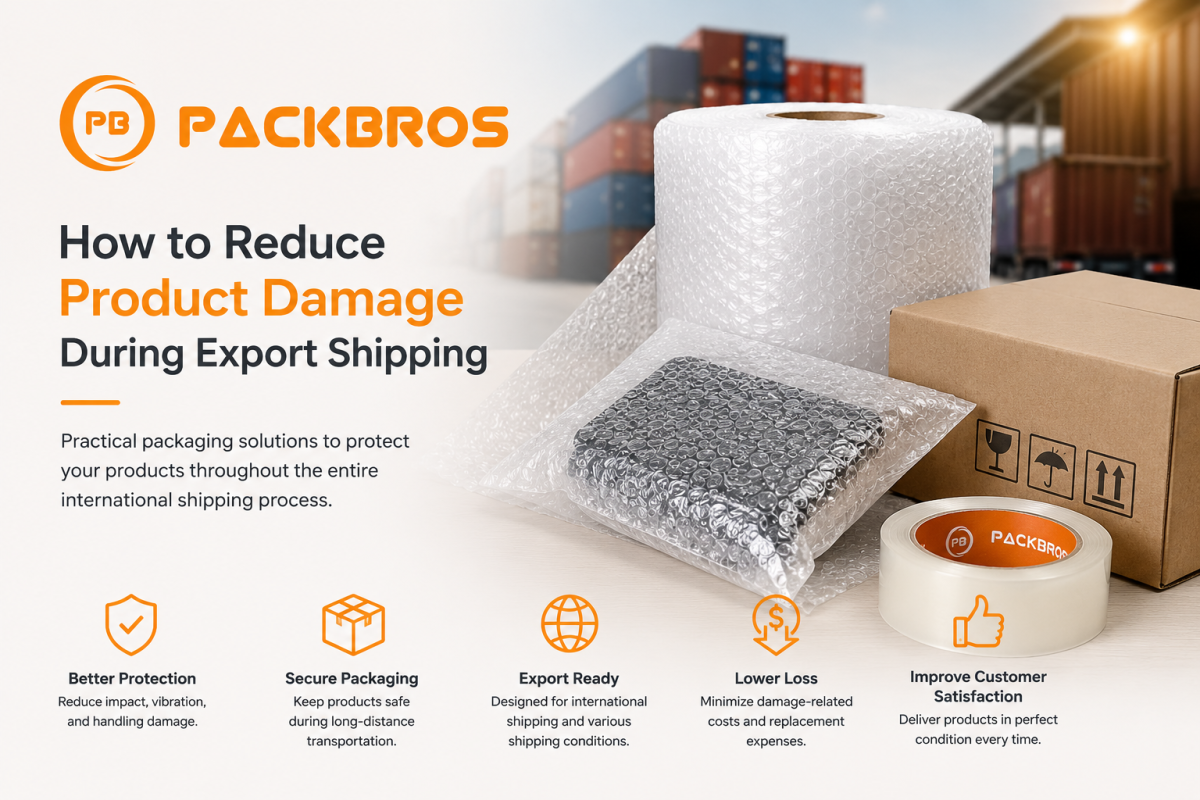
How to Reduce Product Damage During Export Shipping
Introduction
Product damage during international shipping can be costly for manufacturers, exporters, distributors, and e-commerce businesses.
A single damaged shipment may result in replacement costs, customer complaints, delayed deliveries, insurance claims, and damage to a company’s reputation.
As products travel through multiple warehouses, ports, trucks, and handling facilities before reaching their final destination, proper packaging becomes one of the most important factors in preventing damage.
This article explains practical ways businesses can reduce product damage during export shipping and improve delivery reliability.
Why Export Shipments Face Higher Risks
Export shipments often travel much farther than domestic deliveries.
Products may be subjected to:
- Multiple loading and unloading processes
- Long transportation times
- Container movement during sea freight
- Warehouse handling
- Stacking pressure
- Vibration during transportation
- Accidental drops and impacts
Without adequate protective packaging, products become more vulnerable to damage throughout the supply chain.
Choose the Right Protective Packaging Materials
Selecting appropriate packaging materials is the first step in reducing shipping damage.
Common protective packaging materials include:
- Bubble Wrap
- Air Bubble Film
- Foam Packaging
- Stretch Film
- Corrugated Boxes
- Protective Corner Guards
The right solution depends on the product’s size, weight, fragility, and shipping conditions.
Use Bubble Wrap to Absorb Impact
Bubble wrap remains one of the most widely used protective packaging materials for export shipments.
It helps:
- Cushion products during transportation
- Absorb impact from drops and handling
- Reduce surface scratches
- Protect delicate components
- Minimize movement inside cartons
Many manufacturers use bubble wrap for:
- Electronics
- Automotive parts
- Industrial components
- Medical devices
- Consumer products
- Glass products
Proper wrapping can significantly reduce the risk of transit damage.
Eliminate Empty Space Inside Cartons
One common cause of shipping damage is excessive movement inside the box.
When products shift during transportation, the risk of impact damage increases.
To minimize movement:
- Use bubble wrap around individual products
- Fill empty spaces with protective materials
- Select appropriately sized cartons
- Avoid oversized packaging
Proper product positioning helps improve shipment stability.
Use Strong Export-Grade Cartons
Packaging protection is only as strong as the outer carton.
For export shipments, businesses should consider:
- Double-wall cartons
- Heavy-duty corrugated boxes
- Moisture-resistant packaging when necessary
- Cartons designed for stacking strength
Weak cartons may collapse under the weight of other shipments during transport.
Protect Fragile Areas
Certain product components are more vulnerable than others.
Examples include:
- Corners
- Screens
- Glass surfaces
- Connectors
- Sharp edges
Additional cushioning should be applied to these areas to improve protection.
Consider Shipping Conditions
Products shipped internationally may encounter different environmental conditions.
Factors to consider include:
- Humidity
- Temperature changes
- Long transit times
- Ocean freight conditions
- Warehouse storage periods
Packaging should be selected based on the specific shipping route and destination requirements.
Train Packing Staff
Even high-quality packaging materials cannot prevent damage if products are packed incorrectly.
Businesses should establish packing procedures that include:
- Consistent wrapping methods
- Proper carton selection
- Quality inspections before shipment
- Standardized packing instructions
Training helps reduce human error and improve packaging consistency.
Work with Reliable Packaging Suppliers
A reliable packaging supplier can help businesses select appropriate materials for their products and shipping requirements.
Important considerations include:
- Product consistency
- Manufacturing quality
- Reliable supply
- Technical support
- Custom packaging solutions
The right supplier becomes an important part of maintaining product quality throughout the export process.
Conclusion
Reducing product damage during export shipping requires more than simply choosing a strong box.
Businesses should evaluate packaging materials, carton strength, product positioning, shipping conditions, and packing procedures to ensure products arrive safely.
By investing in proper protective packaging, companies can reduce losses, improve customer satisfaction, and build stronger long-term relationships with international customers.
Frequently Asked Questions
Why is bubble wrap commonly used for export packaging?
Bubble wrap provides cushioning protection that helps absorb impacts and reduce product damage during transportation.
How can I prevent products from moving inside cartons?
Use protective packaging materials to fill empty spaces and select cartons that fit the product properly.
Are stronger cartons important for exports?
Yes. Export shipments often experience more handling and stacking pressure than domestic shipments.
What products benefit most from bubble wrap protection?
Electronics, automotive parts, industrial products, medical devices, glass items, and fragile consumer products commonly benefit from bubble wrap packaging.