

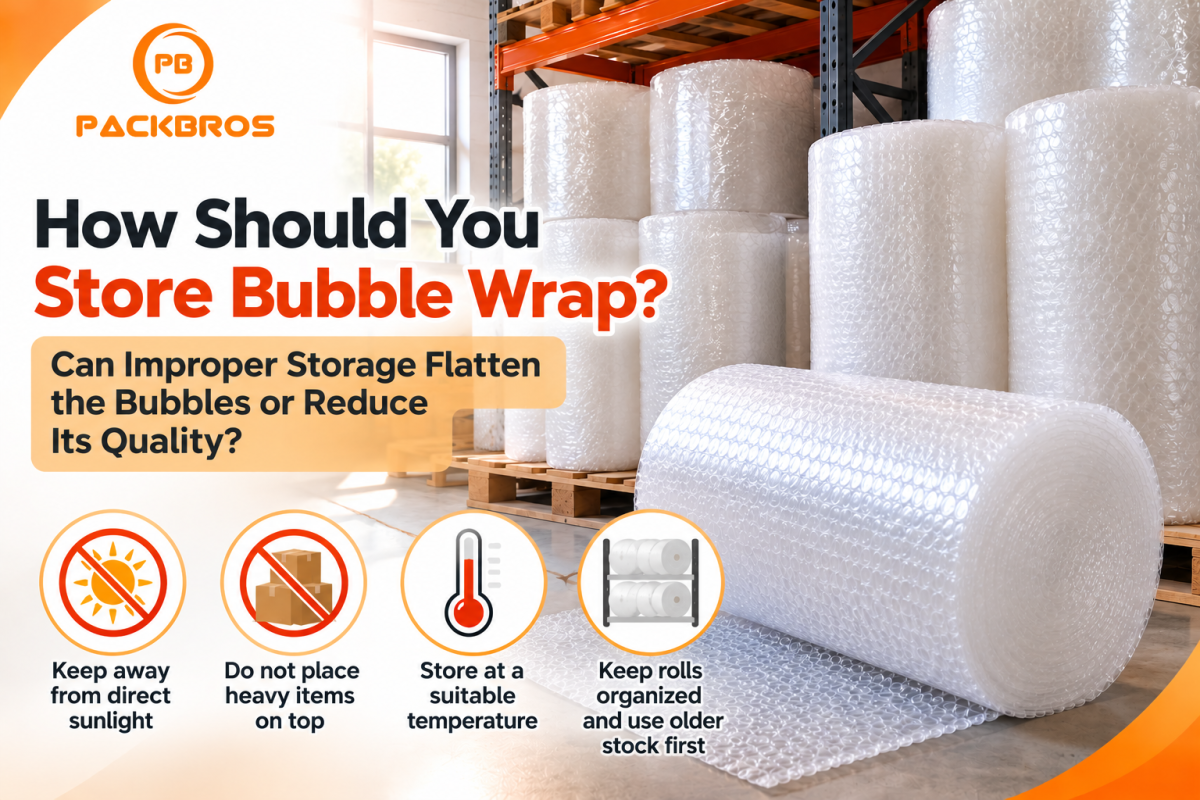
How Should You Store Bubble Wrap? Can Improper Storage Flatten the Bubbles or Reduce Its Quality?
Bubble wrap is a packaging material that many online sellers, warehouses, and factories purchase in bulk. For businesses that use bubble wrap every day, keeping extra rolls in stock helps prevent packaging material shortages during busy periods.
However, one important question is often overlooked:
How should bubble wrap be stored, and can improper storage cause the bubbles to flatten or the material to deteriorate?
Bubble wrap does not have a simple expiration date like food products. However, its condition can be affected by the storage environment, especially direct sunlight, excessive heat, pressure, and improper stacking.
1. Avoid Storing Bubble Wrap in Direct Sunlight
Bubble wrap is made from plastic film, so rolls should not be stored under direct sunlight for extended periods.
Areas to avoid include:
- Warehouse entrances exposed to sunlight throughout the day
- Areas next to windows receiving strong direct sunlight
- Pickup trucks or delivery vehicles parked outdoors for long periods
- Outdoor storage areas without proper roofing
Long-term exposure to heat and UV radiation can accelerate the degradation of plastic materials.
For businesses purchasing bubble wrap in bulk, rolls should therefore be stored indoors and away from direct sunlight.
2. Do Not Place Heavy Items on Bubble Wrap Rolls
Warehouse space can be limited, and large bubble wrap rolls may sometimes look like convenient surfaces for stacking boxes or other materials.
This is not recommended.
Bubble wrap protects products using air trapped inside thousands of individual bubbles. When heavy objects continuously press against the rolls, some bubbles may become compressed, deformed, or damaged.
This is particularly important for rolls stored underneath other materials for long periods.
If you notice some flattened or damaged bubbles, it does not necessarily mean the entire roll is unusable. The actual condition of the material should be inspected before use.
3. Can Bubble Wrap Rolls Be Stacked?
Yes, bubble wrap rolls can be arranged or stacked to save warehouse space, but excessive compression should be avoided.
The higher the stack becomes, the more pressure may be placed on the rolls at the bottom.
For warehouses storing large quantities of bubble wrap, it is better to designate a specific storage area where the rolls are not compressed by heavier products or pallets.
A properly organized storage area also makes stock counting and material handling easier.
4. What Temperature Is Suitable for Storing Bubble Wrap?
For normal warehouse use, bubble wrap generally does not require a specially temperature-controlled room.
The more important consideration is avoiding unusually high temperatures and direct heat sources.
For example, avoid storing bubble wrap:
- Next to machinery that produces significant heat
- Under extremely hot metal roofing without adequate ventilation
- In enclosed areas where heat accumulates during the day
- In locations exposed to direct sunlight
An indoor warehouse with reasonable ventilation and protection from direct sunlight is generally more suitable for storing bubble wrap.
5. If You Purchase Multiple Batches, Which Rolls Should Be Used First?
Businesses that regularly purchase packaging materials should consider using the FIFO — First In, First Out method.
In simple terms:
The stock received first should be used first.
For example:
Batch A — received in January
Batch B — received in February
Batch C — received in March
When bubble wrap is needed, Batch A should normally be used before opening Batch B or C.
This prevents older rolls from remaining unused at the back of the warehouse for unnecessarily long periods.
For businesses buying packaging materials in larger quantities, stock planning should also take monthly consumption into account rather than simply filling all available warehouse space.
6. Why Does an Older Bubble Wrap Roll Sometimes Look Smaller or Flatter?
First, determine whether:
the entire roll has simply been compressed
or
the individual air bubbles have actually been damaged.
The external diameter of a bubble wrap roll alone is not enough to determine its actual quantity or condition.
Roll tightness, material structure, and compression during storage can all affect how large or compact a roll appears.
If a stored roll looks unusually flat, open part of the roll and check:
- Are the individual bubbles still filled with air?
- Are large areas of bubbles damaged or flattened?
- Is the plastic film still in normal condition?
- Are there tears or other signs of storage damage?
The quality of bubble wrap should not be judged only by the apparent size of the roll.
7. How Should Businesses Store Large Quantities of Bubble Wrap?
For online businesses, fulfillment centers, and factories using large quantities of bubble wrap, it can be useful to divide the storage area into two sections.
Reserve Stock Area
This area holds unopened rolls that are not yet required for daily operations.
Active Packing Area
This area contains the rolls currently being used at packing stations.
Staff can then replenish the active packing area from reserve stock according to the FIFO system.
This makes it easier to control inventory and reduces unnecessary movement of large bubble wrap rolls around the warehouse.
It is also useful to establish a standard amount of bubble wrap for frequently packed products. This can help businesses estimate monthly consumption and plan purchasing more accurately.
8. What Should You Check Before Using Bubble Wrap That Has Been Stored for a Long Time?
Bubble wrap does not automatically need to be discarded simply because it has been stored for a long period.
Instead, inspect its actual condition.
Air bubbles — Are the bubbles still properly inflated?
Plastic film — Does the film still appear to be in normal condition?
Tears or damage — Has the material been damaged during storage or handling?
Cleanliness — Has the roll collected excessive dust or contamination?
For fragile or higher-value products, it is also a good idea to perform a packing test before using older material for a large batch of shipments.
Proper Bubble Wrap Storage Can Also Help Control Packaging Costs
Proper storage is not only about maintaining material quality.
If rolls become damaged, are misplaced in the warehouse, or new rolls are opened before older rolls are finished, packaging inventory becomes more difficult to control.
For businesses that use bubble wrap every day, proper storage should therefore be combined with suitable roll widths and standardized packaging procedures.
PackBros manufactures and supplies bubble wrap rolls for online sellers, warehouses, factories, and businesses that use packaging materials in volume. Different roll widths are available to suit different products and packing operations.
Summary
The basic principles for storing bubble wrap are simple:
Keep it indoors + avoid direct sunlight and excessive heat + do not place heavy objects on the rolls + avoid excessive compression + use older stock first.
For businesses purchasing dozens or hundreds of rolls at a time, a well-organized storage area and FIFO inventory system can make bubble wrap easier to manage while reducing unnecessary material damage.
Frequently Asked Questions
How long can bubble wrap be stored?
There is no single storage period that applies to every environment. The actual condition of the bubbles and plastic film should be inspected before use, especially when the material has been stored for an extended period.
Can bubble wrap be stored in direct sunlight?
It is not recommended. Prolonged exposure to heat and UV radiation can accelerate plastic degradation. Bubble wrap should preferably be stored indoors and away from direct sunlight.
Can bubble wrap rolls be stacked?
Yes, but they should not be stacked or compressed to the point where excessive pressure is placed on the rolls at the bottom. Heavy products should not be placed directly on top of bubble wrap rolls.
Can I still use a bubble wrap roll if it looks flattened?
Check the individual bubbles before deciding. A roll that looks compressed does not necessarily mean all of the bubbles are damaged. Inspect the material after unrolling a section.
How should a business manage a large inventory of bubble wrap?
Using FIFO is a practical approach. Use older stock first, separate reserve stock from active packing stock, and periodically check