
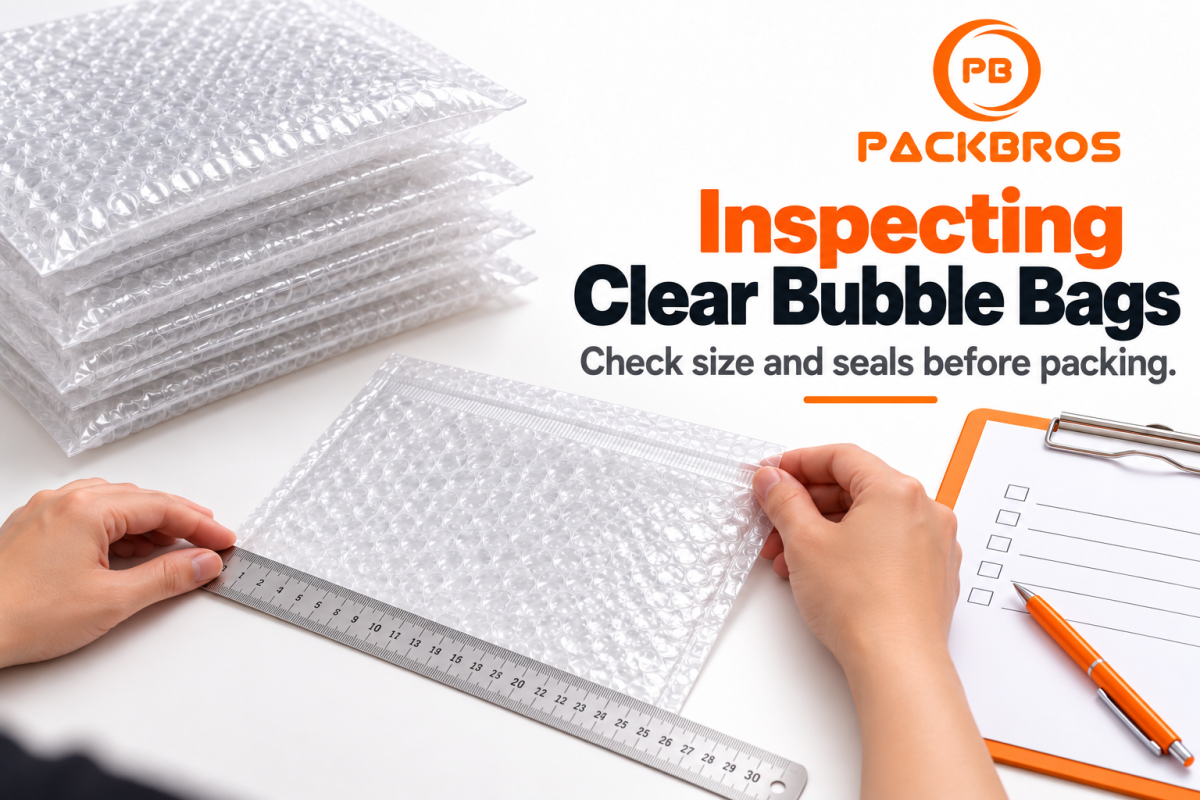
What Should You Check When Receiving a Bulk Order of Clear Bubble Bags?
Before releasing a bulk order of clear bubble bags to the packing team, compare the delivery with the agreed specifications and approved sample. Check dimensions, sealed edges, material condition and the closure where applicable, then test the bags with the actual product.
A bag that looks correct while empty may behave differently once the product is inserted. Incoming inspection should therefore include both measurements and a practical packing trial.
Start With the Agreed Specifications
Keep the purchase order, specification sheet and approved sample available during inspection.
Confirm what was ordered:
- Bag width and body length
- Whether dimensions refer to the outside or usable interior
- Whether flap length is included or stated separately
- Adhesive or non-adhesive opening
- Material specification and agreed tolerances
- Quantity per pack and total order quantity
These details matter because different measurement conventions can produce an apparent discrepancy.
For example, a stated body length and a total length including the flap are different measurements. Confirm the convention before deciding that the delivery is the wrong size.
Measure Without Stretching the Bag
Lay the bag flat and measure it using the agreed method. Do not stretch the film to make it match the specified dimensions.
Record the width, body length and flap length separately where relevant.
Also consider the usable interior. Sealed edges and product thickness affect the available space, so an external measurement alone does not confirm that the product will fit.
Compare the measurements with the agreed tolerance. Avoid creating an acceptance limit after the delivery has arrived.
Inspect the Sealed Edges
Look along the side and bottom seals for visible openings, interrupted sections, cuts or other irregularities.
Then insert the intended product using the normal packing method. Observe whether the edges remain intact without forcing the item into the bag.
If a seal-strength test is part of the purchase specification, follow that agreed procedure. An improvised hard pull may damage a usable bag without providing a meaningful comparison.
Record where any issue occurs so the supplier can identify the affected area.
Check the Closure for the Bag Type Ordered
For bags with an adhesive flap, inspect the release liner, adhesive position and flap condition.
Test closure using the actual product and the intended packing process. Check that the flap can reach its closing position without being pulled excessively tight.
For bags without an adhesive flap, check that the opening works with the planned next step, such as placing the protected product inside an outer carton.
The practical differences between these workflows are explained in our guide to how clear bubble bags can simplify repetitive packing.
Check the Material Without Damaging It
Inspect for visible damage, contamination and areas where the bubble cushioning has lost its form.
Avoid popping bubbles as an inspection method. This damages the sample and does not establish whether the bag meets the purchase specification.
Also check whether workers can identify the product through the material if visibility is important to the packing process.
Sample Across the Delivery
Taking every sample from the top of one pack may miss variation elsewhere in the delivery.
Use the agreed sampling plan and include different packs or cartons as appropriate. Keep lot or batch information with the inspection record.
There is no universal sample quantity for every order. The inspection scope should reflect the agreed quality requirements, order size and consequences of a defect.
For a new specification or supplier, agree on the sampling and acceptance method before placing the order.
Run a Trial at the Packing Station
Use products in the condition in which they will actually be packed, including their normal retail packaging or protective inserts.
Ask a packer to complete the intended sequence:
- Pick up the bag.
- Insert the product.
- Close it using the planned method.
- Place it in the outer shipping package.
- Check the finished packing arrangement.
Observe whether insertion strains the seals, the closure remains accessible and the bag fits the workflow.
A successful fit check is one part of acceptance. It does not replace checks for dimensions, material, quantity and other agreed requirements.
Clear bubble bags can serve as inner cushioning. The complete shipping package still needs to be suitable for the product and transport conditions.
Record Problems Before Releasing the Stock
A useful inspection record includes:
| Record | Details to keep |
|---|---|
| Delivery identification | Purchase order, delivery date and lot or batch reference |
| Inspection scope | Packs or cartons sampled and quantity inspected |
| Measurements | Measured dimensions and agreed tolerance |
| Observed issue | Type of problem and location on the bag |
| Evidence | Clear photos, including a ruler where relevant |
| Stock status | Accepted, held for review or awaiting supplier instructions |
Keep affected stock separate while the issue is reviewed. Avoid cutting, resealing or otherwise modifying it before documenting the condition and agreeing on the next step.
Preparing a Clear Bubble Bag Requirement for PackBros
For a clear bubble bag enquiry, prepare the product’s width, length and thickness, the intended closure method and the quantity required.
An approved sample and a documented inspection method make it easier to compare future deliveries consistently.
You can use the PackBros packaging enquiry information to prepare your requirements, then confirm clear-bag options, sample arrangements and production timing directly with the team.
FAQ
Do we need to inspect every bag in a bulk order?
Not always. Use an agreed inspection plan that reflects the quality requirements and risk of the application. Problems found during sampling may require further inspection or supplier review.
Does a small difference in dimensions mean the order should be rejected?
Compare the measurement with the agreed tolerance and measurement method. Also check whether the difference affects product fit or closure. Do not assume a tolerance that was never agreed.
Is successful product insertion enough to accept the delivery?
No. Fit is only one check. The delivery should also meet the agreed requirements for material, seals, closure, quantity and other specified details.
Should we pull the seals hard to test them?
Use an agreed test procedure if seal strength is a requirement. An improvised force test may damage the bag and produce inconsistent results.
Conclusion
Check a bulk clear bubble bag delivery against the agreed specifications, sample across the stock and run a trial with the actual product.
Document any issue before releasing the material to the packing team. This gives both the buyer and supplier a clearer basis for resolving discrepancies.