

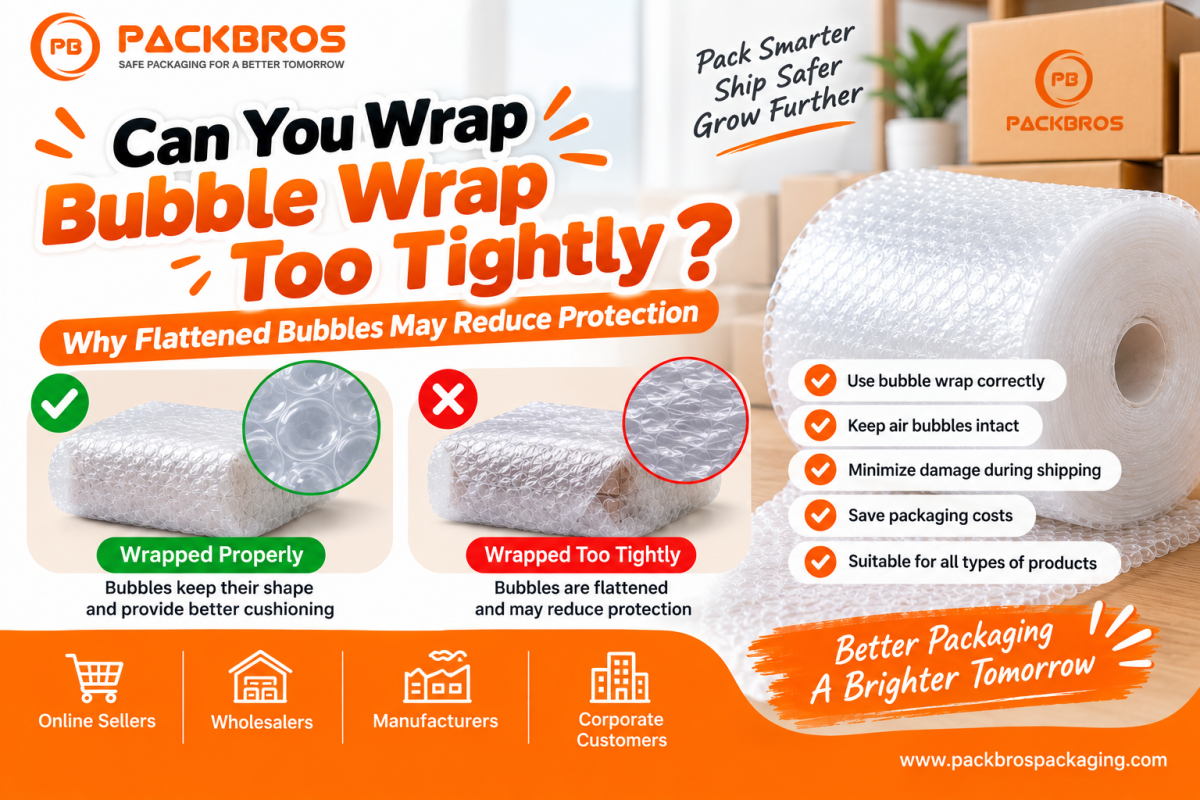
Can You Wrap Bubble Wrap Too Tightly? Why Flattened Bubbles May Reduce Protection
Many people assume that the tighter they wrap bubble wrap around a product, the better the protection will be.
However, wrapping bubble wrap too tightly until the air bubbles become flattened does not necessarily provide better protection.
The air trapped inside each bubble is an important part of the cushioning structure that helps protect products during handling and transportation.
What Do the Air Bubbles Actually Do?
Bubble wrap contains many small air-filled pockets that create a cushioning layer around a product.
When a package experiences impact or pressure during transportation, these air pockets help create separation between the product and external forces.
The goal of wrapping is therefore not to compress the bubble wrap as tightly as possible.
Instead, the objective is to create an appropriate protective layer around the product.
If many of the bubbles are already flattened during packing, those areas may provide less cushioning when the package is later exposed to impact.
How Tight Should Bubble Wrap Be?
Bubble wrap should fit snugly around the product without being pulled so tightly that the bubbles become compressed or flattened.
After wrapping, the material should not move or slip easily. At the same time, most of the bubbles should still retain their shape and air.
Instead of stretching the bubble wrap tightly around the product, use packaging tape to secure the ends and keep the protective layer in position.
Fragile Products Should Not Simply Be Wrapped Tighter
For glassware, ceramics, bottled cosmetics, electronics, or other fragile products, increasing protection does not mean pulling the bubble wrap tighter.
A better approach is to increase the number of bubble wrap layers where necessary and reinforce vulnerable areas such as:
- Corners
- Edges
- Bottle bases
- Protruding parts
- Areas likely to contact the inside of the shipping box
The appropriate number of layers depends on the product’s weight, shape, fragility, and shipping conditions.
More Layers Will Not Help If Every Layer Is Over-Compressed
Imagine wrapping a product with three layers of bubble wrap, but pulling every layer so tightly that many of the air pockets become flattened.
More packaging material has been used, but the effective cushioning may not increase proportionally.
Each layer should therefore retain its structure while remaining secure around the product.
This is also why measuring only how many meters of bubble wrap are used per order does not tell the whole story. Packing technique also affects how effectively the material is used.
Prevent Products From Moving Inside the Box
Even when bubble wrap is applied correctly, a product may still be damaged if there is too much empty space inside the shipping box.
If the wrapped product can move freely, it may repeatedly hit the sides of the box during transportation.
After placing the product inside the box, check the empty space around it and use additional cushioning or void-fill material when necessary.
This is particularly important for heavy products, as the weight of the product itself can generate greater impact when it moves inside the package.
Bubble Wrap Quality Also Matters
Packing technique is only one part of product protection.
Bubble wrap should have reasonably consistent air pockets, remain intact during normal handling, and not contain large areas of flattened bubbles before use.
The appropriate material thickness should also be selected according to the product’s weight, fragility, shape, and shipping conditions.
Using the thickest bubble wrap available is not automatically necessary for every product.
Proper Bubble Wrap Usage Can Also Help Control Packaging Costs
For online sellers, warehouses, and manufacturers packing large numbers of orders, even a small amount of unnecessary material per package can become a significant expense over thousands of shipments.
The goal should therefore be to balance:
Material usage + Packing technique + Product protection
rather than simply adding more bubble wrap whenever additional protection is required.
Choose Bubble Wrap That Fits Your Packaging Needs
PackBros manufactures and supplies bubble wrap, bubble mailers, and protective packaging materials in Thailand for online sellers, wholesalers, manufacturers, factories, and corporate customers.
Choosing the appropriate bubble wrap width and using it correctly can help businesses protect products while reducing unnecessary packaging material.
Frequently Asked Questions
Is tighter bubble wrap always better?
No. Bubble wrap should be secure around the product, but it should not be pulled so tightly that a large number of air bubbles become flattened.
Should I wrap fragile products tighter or use more layers?
For fragile products, it is generally better to provide appropriate additional cushioning and reinforce vulnerable areas rather than simply compressing the bubble wrap more tightly.
Can a bubble-wrapped product move inside the shipping box?
Ideally, excessive movement should be minimized. Empty spaces may require additional cushioning or void-fill material, particularly for fragile or heavy products.
Can I still use bubble wrap if some bubbles are flat?
A small number of flattened bubbles may not make the entire sheet unusable. However, if a large area has lost its air, the cushioning performance in that area may be reduced.