
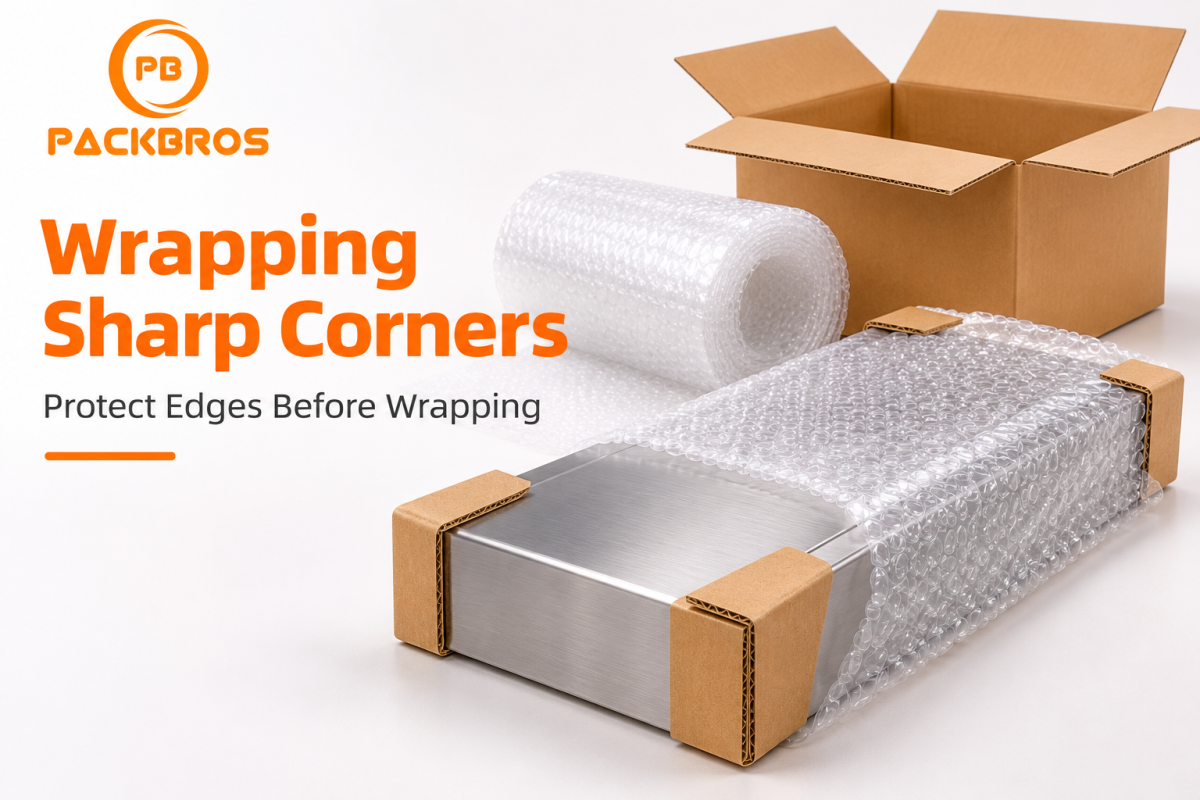
Before wrapping an item with sharp corners or edges, cover the sharp areas with suitable guards or protective padding and secure them in place. Bubble wrap can then provide cushioning around the protected item.
Adding more bubble wrap alone may not solve the problem. A sharp edge can still press or rub against the film as the item moves. The packing method should address the edge itself, the item’s weight and movement inside the shipping container.
Identify the Type of Edge Before Packing
Different shapes need different protection.
| Item feature | Main concern | Preparation before wrapping |
|---|---|---|
| A hard projecting corner | Concentrated pressure on the wrapping | Fit an appropriate corner guard |
| A long sharp edge | Cutting or rubbing along the film | Cover the full exposed edge |
| A protruding bolt or fitting | Snagging or puncturing the packaging | Use a secure cap or suitable protective cover |
| Several components in one carton | Edges contacting neighbouring items | Wrap separately and use dividers |
For cutting edges or pointed parts that could cause injury, use purpose-designed covers or packaging. Bubble wrap should not be the only barrier over the sharp area.
Cover the Sharp Areas First
Depending on the item, suitable protection may include formed corrugated board, foam guards or purpose-made caps.
The guard should cover the exposed area and remain in position during handling. Its suitability depends on the sharpness, shape and weight of the component.
For painted, polished or easily marked surfaces, check that the guard itself will not damage the finish. Avoid applying adhesive tape directly to the product unless its compatibility has been confirmed.
Secure the Guards Without Distorting the Item
A guard that slips out of position may leave the original edge exposed.
Check that it stays in place when the item is carefully lifted or repositioned. Secure the protective material to itself or to an appropriate outer wrapping layer.
Do not tighten tape so much that it deforms the guard or loads a fragile part. If the protection must be forced into position, review its size or shape.
Wrap the Protected Item Completely
Once the sharp areas are covered, cut enough bubble wrap to cover the item and the guards, including the ends.
Choose a roll width that suits the component and reduces unnecessary joins. Avoid stretching the film tightly across projecting corners.
Bubble wrap is part of the cushioning system; it is not universal puncture protection. A thicker-looking bundle does not confirm that a sharp edge has been adequately contained.
Control Movement Inside the Carton
Even a well-wrapped component can rub against its packaging if it shifts during transportation.
Select an outer container and internal supports appropriate to the item’s weight. Keep separate components from contacting one another.
Loose bubble wrap around a heavy component may not provide sufficient restraint. Some items require fitted supports, blocking or other packaging designed for their load and shape.
Check the Completed Pack
Before adopting a packing method for regular orders, trial it with the actual component.
Check that:
- Every sharp area remains covered.
- No point or edge projects through the wrapping.
- Film around corners is not visibly stretched or torn.
- Guards remain in place.
- The item cannot move into neighbouring components or the carton walls.
- Protruding parts do not push the outer container out of shape.
Do not press your fingers along the wrapping to search for sharp points. If a puncture is suspected, open and inspect the pack carefully.
These checks can identify obvious weaknesses, but they do not replace appropriate packaging testing for heavy, valuable or unusually vulnerable items.
Choosing Bubble Wrap for the Job
Start with the component’s dimensions, weight, surface finish and projecting features. Then consider roll width and cushioning alongside the required edge protection.
When discussing bubble wrap rolls with PackBros, provide photographs, dimensions and weight, including close-ups of any sharp areas. This helps explain the wrapping task and the roll size required.
Corner guards, internal supports and the shipping container should be selected separately to suit the application.
Frequently Asked Questions
Can extra layers of bubble wrap replace corner guards?
Do not assume they can. A sharp edge may still cut or rub through the film. Cover the edge first, then select suitable cushioning.
Is corrugated cardboard suitable for every sharp corner?
No. If it punctures, collapses or slips under the expected load, a different guard or protective system is needed.
Should a heavy corner be protected even if it is not sharp?
Yes, it deserves particular attention. A hard, heavy corner can compress cushioning and damage the outer container.
Can several components share one carton?
They can when each item is protected and adequately restrained. Sharp or projecting parts should not contact neighbouring items.
Before adding more wrapping, check the edge protection and movement control. Addressing those two issues helps make the cushioning work as intended.